Level Guide
Escape the Backrooms Level 37 2 Poolrooms
Escape the Backrooms Level 37.2 Poolrooms walkthrough: use the intended movement route, protect Sanity, and navigate the second Poolrooms section safely.
Read More → Escape the Backrooms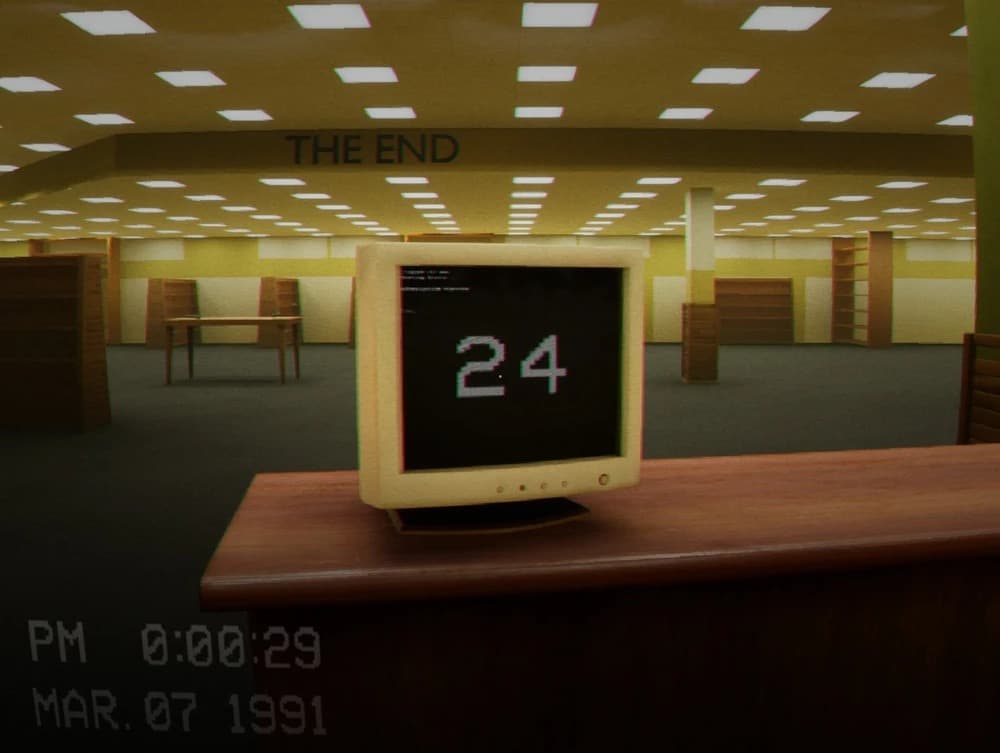
Keep exploring
Level Guide
Escape the Backrooms Level 37.2 Poolrooms walkthrough: use the intended movement route, protect Sanity, and navigate the second Poolrooms section safely.
Read More →
Level Guide
Escape the Backrooms Level 94 Motion walkthrough: use hill timing cues, reach the computer objective, and apply the PASSWORD clue at the right moment.
Read More →
Level Guide
Escape the Backrooms Level 3999 Arcade guide: treat the Arcade as a completion checkpoint, handle its objectives, and prepare the route toward the ending.
Read More →Escape the Backrooms Level The End Library Updated Guide is easiest when you treat it as a sequence of small, confirmable decisions instead of a race to the first exit you notice. This guide concentrates on library objectives, clue handling, and exit preparation. Your first goal is not to memorize every room. It is to establish a repeatable loop: find a clear landmark, identify the next required action, and leave yourself a route back if the situation changes.
The pressure in this area usually comes from treating every shelf as equally important. Slow the run down for a few seconds whenever you enter a new section. Check the direction you arrived from, look for the clue that proves you are in the right place, and agree on the next destination before anyone drifts ahead. That simple habit saves more attempts than any risky shortcut.
Begin with a reconnaissance pass rather than a full search. Follow the most readable route through the opening space, noting doors, signs, unusual lighting, and objects that stand apart from the background. These details are more useful than an abstract map because they still work when the group gets separated or an encounter forces you to retreat.
Keep your movement purposeful. If an interaction does not clearly advance the route, leave it for a second pass. This prevents the team from carrying too many unfinished ideas at once. In solo play, say the plan to yourself before moving on. In co-op, name the landmark and the intended objective in one short callout. Everyone should be able to describe where to regroup without relying on a vague direction.
Once the opening route is clear, work through the objective one piece at a time. Confirm what must be collected, activated, avoided, or matched before you spend time searching for a final exit. If the level presents a puzzle, record the clue first and interact second. A wrong attempt can cost more time than a careful observation.
Use safe positions as real checkpoints. After completing a step, pause long enough to check inventory, stamina, light, and team position. The best route is not always the shortest line on paper; it is the line that lets you recover from a missed turn. When a hazard changes the pace, return to the last known landmark and rebuild the route from there instead of guessing.
As the run approaches its final objective, reduce unnecessary exploration. You should now know which route is productive, which rooms are optional, and which actions can wait until a later attempt. Prioritize marked areas and record clues before changing rooms. Keep the exit path in mind while completing the final interaction so you are not forced to solve the last part twice.
For groups, use roles without overcomplicating them: one player confirms the next objective, one watches the approach, and everyone calls out a change in danger. For solo players, use the same discipline by moving only after you can explain why the next room matters. This approach turns a tense section into a series of manageable choices.
Prioritize the first action that confirms the route: a landmark, required item, puzzle clue, or safe transition. Everything else becomes easier once that anchor is established.
No. Explore until you can prove which branch advances the objective, then return for optional discoveries only when the route is stable.
Regroup at the last landmark everyone recognizes. Rebuild the plan from that point rather than sending different players into separate guesses.
For another route with a different kind of pressure, continue with the next Escape the Backrooms guide.
The updated Library has enough repeated shelves and rooms that a broad search quickly becomes noise. Start each pass with one question: are you looking for an objective item, a condition that changes access, or the exit route after the condition is met? Once that question is answered, return to a named shelf row, desk, or doorway before choosing the next one. This keeps the team from turning every book-lined room into a separate, untracked guess.
Late-game progress is often gated by previous actions, so a locked or inactive object is useful information. Record what it needs instead of repeatedly interacting with it. In co-op, one player can maintain the checklist while the others search one defined section at a time. If danger or confusion forces a retreat, rebuild the route from the last confirmed library landmark rather than assuming the nearest staircase returns to the same floor.
Do not overpromise a shortcut based on an older build. A legitimate completion route should make clear which condition opens the next path and what the group should carry forward. When the route points toward the outdoor/castle challenge, continue with the Level 94 Motion walkthrough. For later completion logic and arcade terminals, use the Level 3999 guide.